To ensure that bending could continue, regardless of where the machines were deployed, Maats provided the necessary generators. These units played an important role in ensuring that the internal bending operations could be carried out safely and precisely throughout the construction phase.
Now that the pipeline construction is almost complete and the bending machines have finished their work, Maats was committed to finding a new purpose for these generators – one that would continue to generate value for the local community.
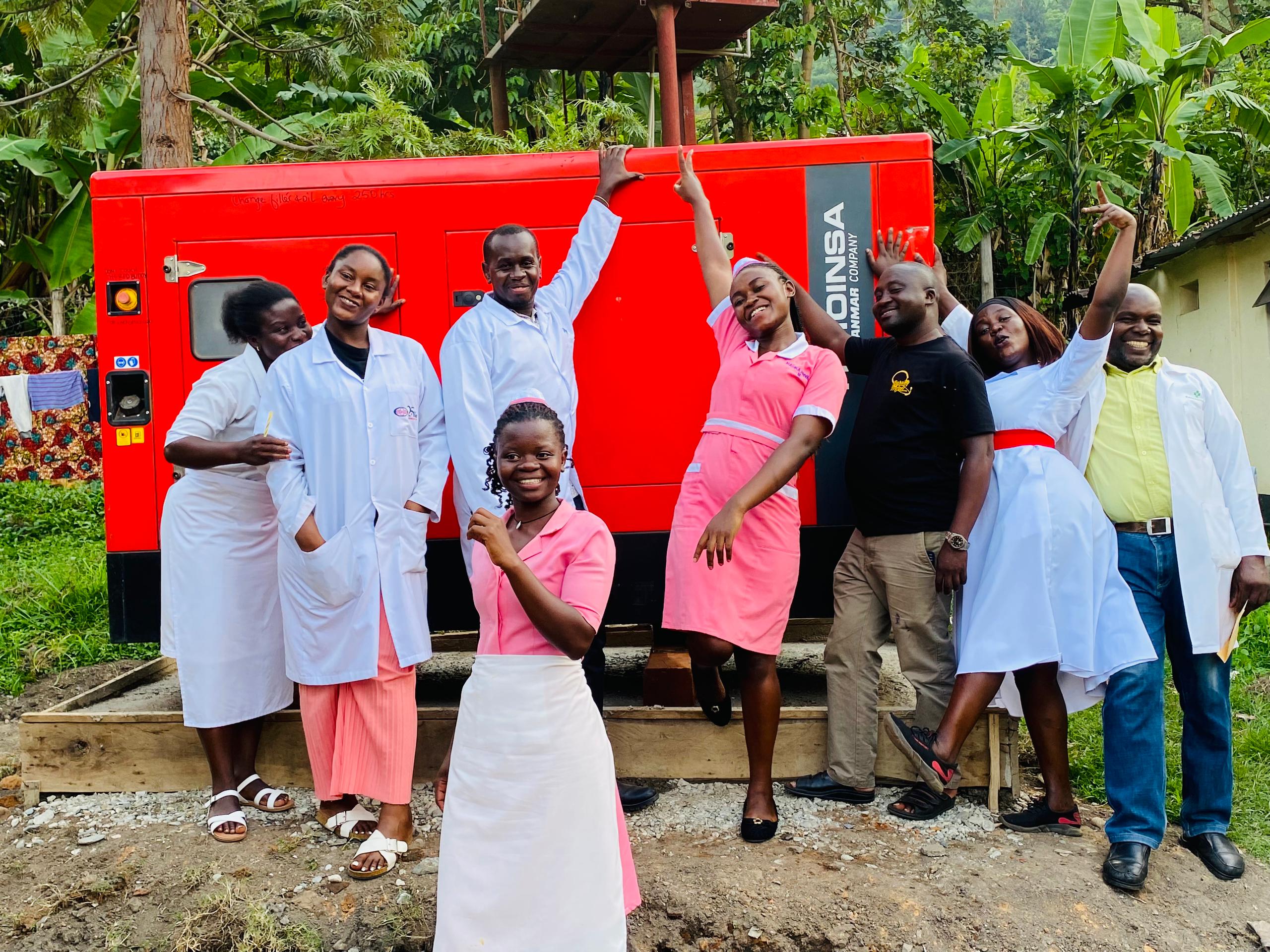
We are pleased to share that we have been able to donate two generators to local hospitals.
The first generator has been donated to the Ugandan Kilembe Mines Hospital, via the Belgian Daktari Project organisation, a second generator has been donated to the Medical Centre in the Iruhuura area in Western Uganda, via the Uphill Trust in Scotland.
In both cases, the generators will be used as dependable emergency power source, ensuring that the medical centers can provide critical services even if the local power network fails. By providing a reliable backup supply, the generator directly supports the hospital’s mission to deliver care to patients without interruption, improving resilience and safety for the community it serves.
Although our company largely revolves around machines, we believe that it is people and organizations like the Daktari Project and the Uphill Trust that make the difference. Maats is proud and happy to be able to contribute and prove that social responsibility is more than just words.
We hope this initiative creates a lasting impact, from powering a world-record pipeline to supporting life-saving services at hospitals; the journey of these generators embodies innovation, and social responsibility in a tangible and meaningful way.

